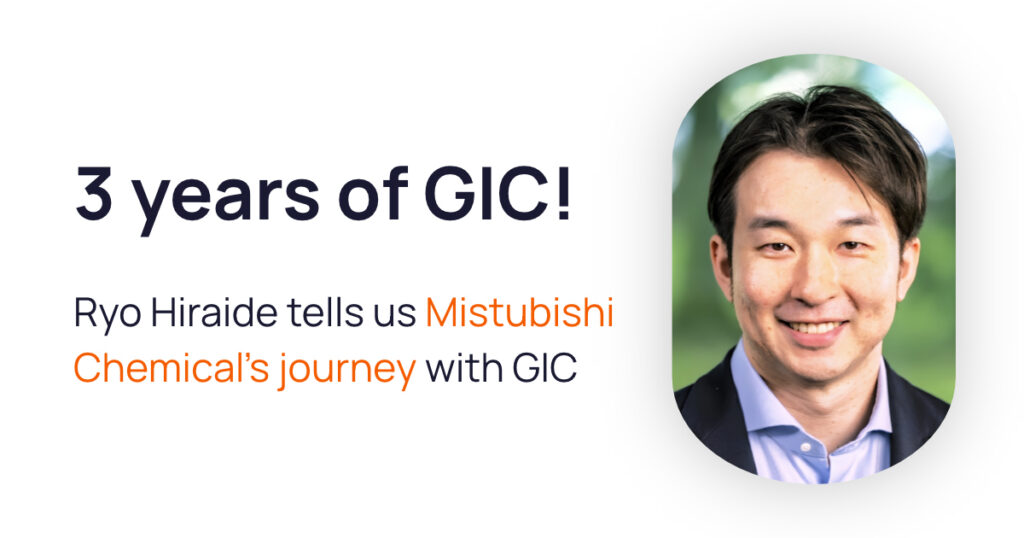
Mitsubishi Chemical Group was in the room before the Global Impact Coalition had its name. Three years on, Ryosuke Hiraide reflects on what it takes for competitors to build something together, and why a tougher market may be the right moment to prove it.
Ryosuke Hiraide, Ryo to his colleagues, has been part of the Global Impact Coalition since before it was called that. Mitsubishi Chemical Group, where he is Manager of the Chief Transformation Office, was among the founding members when the initiative was still taking shape under the World Economic Forum as LCET, the Low-Carbon Emitting Technologies initiative.
As the Coalition marks its third anniversary, he speaks plainly about what has worked, and about what has become harder.
More than a white paper
The founding idea, as he understood it, was easy to state and hard to execute. The world’s major chemical companies would co-invest in and co-develop low-carbon technologies, then make them work in the real economy, on commercial terms. That meant working through a long list of dilemmas, and no single company, or small group of companies, could do it alone.
What persuaded Mitsubishi Chemical Group was the insistence on results. “People tend to assume that joining a coalition means only writing a white paper, or advocacy,” he says. “GIC is not like that.” The point was to carry sustainability out of the realm of concept and into business, through collaboration.
An industry the public does not see
There is a personal reason too. Part of what drew him to chemicals, he says, was the chance to make a difference on sustainability through the business itself.
“Our products are not very visible to consumers,” he says. “But the industry has an enormous impact on the world, and a real responsibility for sustainability. There is so much it could do to make the planet more sustainable.” He has long asked himself how to contribute to that through his own work. GIC, he says, is one of the best places to make it happen in practice.
Competitors in the same boat
What surprised him most was how collaboration actually works in practice. “Collaboration is a beautiful word, but it is very hard to achieve in the real world,” he says. “At GIC, it is the foundation of the platform, by design.”
He had never seen so many chemical companies, normally competitors, sit at the same table and work towards a tangible result. Nor had he seen participants commit resources on this scale.
The relationships are personal as well as corporate. The Executive Committee meets every two weeks, and he now knows the faces behind rival companies that in day-to-day business are competitors. He calls the network unique, and genuinely valuable.
Who gets to lead
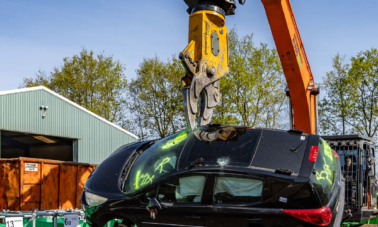
His clearest example of what the Coalition makes possible is its work on automotive plastics. Mitsubishi Chemical That chain, he says, was highly fragmented. Someone had to join the dots.
The harder question was who. “If a single company tried to lead an initiative like this, people would ask why,” he says. “They would be sceptical about what was behind it, and assume the company wanted most of the business benefit for itself.”
GIC, as a platform shared by many stakeholders, had a legitimate reason to take the lead. Its neutrality, in other words, is what gave it standing to convene.
After the enthusiasm
The mood has changed since the Coalition began, and he does not pretend otherwise. Over the past three years, conditions for chemical companies have become markedly tougher, and the business harder to run. Attitudes towards sustainability have shifted too.
Three years ago, he recalls, sustainability was a hot topic, and there was natural energy behind committing resources to it. Today companies are working out how to reconcile profitability with sustainability, two goals he believes must go together, while many are still struggling commercially.
He sees this as a challenge for GIC, but also as an opportunity to shift to the next steps, which, as he describes it, are about making the chemical industry sustainable with a sound business case. That means sharpening the value of the work, and telling a clearer story about how GIC’s activities contribute to the business. “It is getting harder,” he says. “But it is also good timing.”