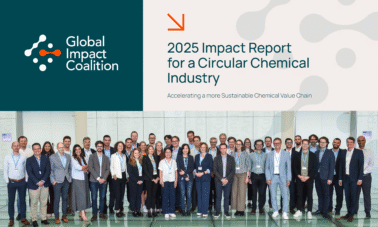
Today, the Global Impact Coalition publishes findings from the first automotive plastics circularity pilot initiated by the chemical industry.
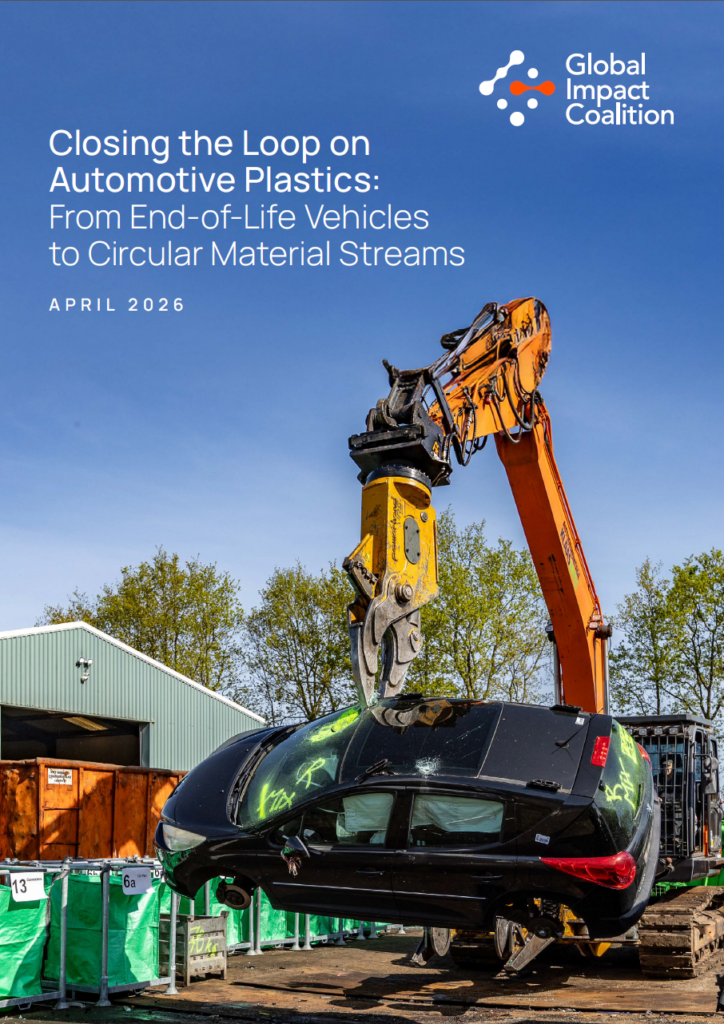
Every year, more than 800,000 tonnes of plastic from end-of-life vehicles are incinerated or landfilled in Europe alone. The pathway to addressing this is understood but the system to deliver it at scale does not yet exist.
Eight companies – BASF, Covestro, LG Chem, LyondellBasell, Mitsubishi Chemical Group, SABIC, SUEZ and Syensqo – collaborated pre-competitively to process 100 end-of-life vehicles (ELVs) through a full dismantling, shredding and sorting chain, recovering approximately 8 metric tonnes of plastic from vehicles of different ages, makes and conditions.
What the pilot confirms
The pilot establishes technical feasibility. Plastic components can be recovered from end-of-life vehicles and processed into material suitable for recycling. However, commercial viability remains to be established. The primary barrier is not technology – it is coordination, economics, and the absence of a value chain framework that aligns incentives across all actors: OEMs, dismantlers, waste management companies, and chemical producers.
As GIC CEO Charlie Tan notes in the report foreword: “Closing the loop on automotive plastics is no longer a question of ambition, it is a question of execution.”
Why this matters now
New EU regulation is raising the stakes significantly. New cars must contain 25% recycled plastic by 2036, with at least 20% sourced from closed-loop vehicle recycling. The current closed-loop share stands at approximately 2.5%. The gap is considerable – as is the opportunity.
The pressure is not limited to Europe. China processed more than 7.9 million end-of-life vehicles in 2024 and launched a national action plan in December 2025 targeting increased recycled material use in automotive manufacturing by 2030. The challenge and the opportunity is global.
What comes next
These findings will shape the next phase of work by unlocking the ELV recycling value chain by evaluating economic viability. This will be done by developing component specific scenario modelling, and key experiments on automation, chemical recycling, and design for recycling.
Download the full report here.